Blog
How Does PEAR Health Labs Power Smart Training with ROOK?
PEAR Health Labs uses ROOK to simplify wearable data integrations, standardize health metrics and power adaptive, personalized training.
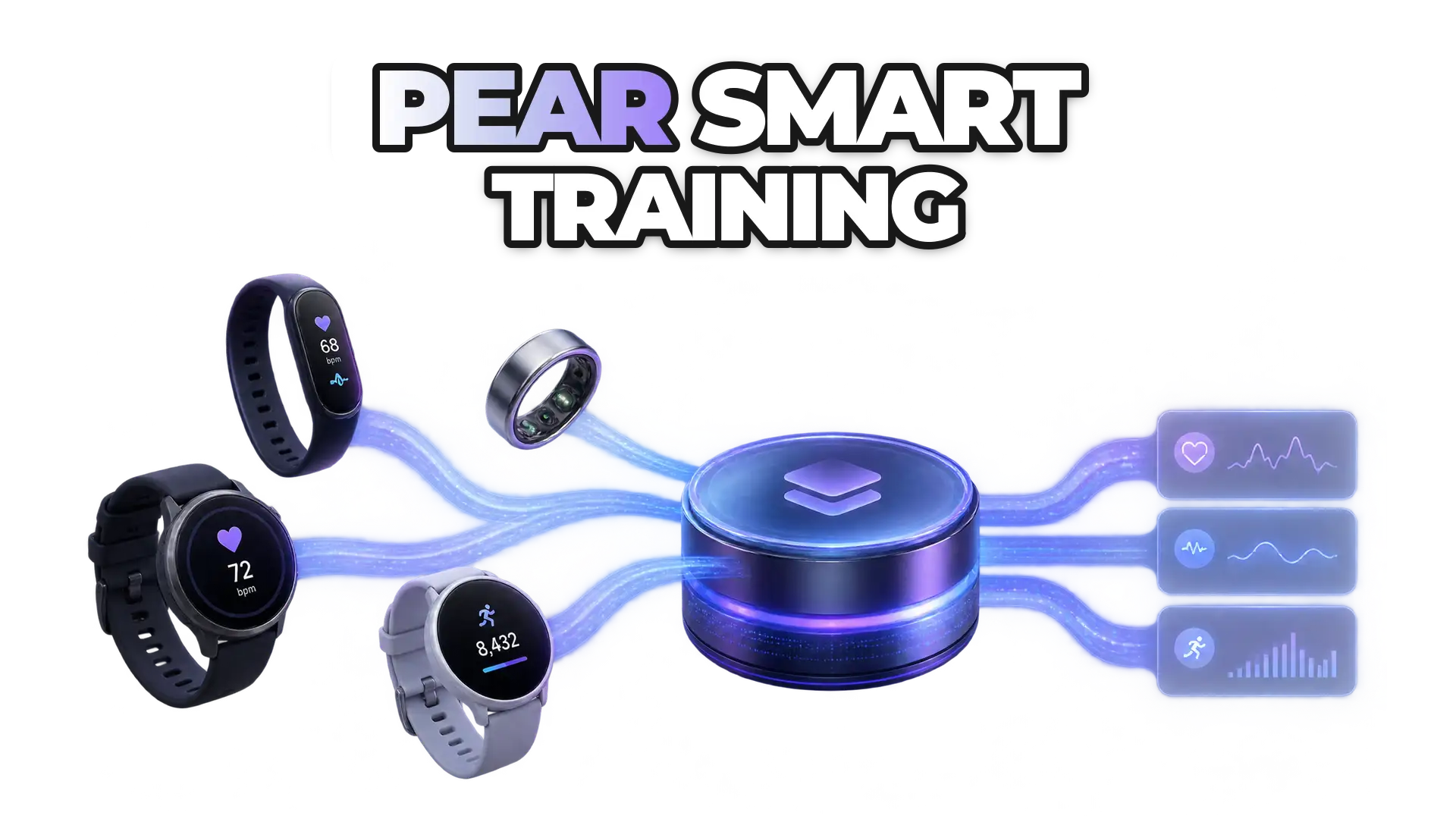
PEAR Health Labs powers adaptive training by using ROOK as its single connection point for wearable data. Instead of building separate integrations per wearable brand, PEAR connected once to the ROOK API and receives standardized heart rate, HRV, effort zone, activity and sleep data. PEAR reports integration with 15+ wearable brands and more than a 70% reduction in technical effort to onboard new devices.
PEAR Health Labs builds personalized training technology that combines exercise science, AI and physiological data. Its platform, PEAR Training Intelligence®, adapts workouts based on signals like heart rate, HRV, effort zones and activity data.
PEAR’s technology is also integrated into the Aaptiv app, helping deliver adaptive fitness experiences to a broad user base.
What wearable data challenge did PEAR Health Labs face?
PEAR needed reliable data from multiple wearable devices to power adaptive training, but the wearable ecosystem is fragmented.
Each device brand has its own SDK, API, data format and authentication process. This created challenges such as:
- High integration and maintenance costs.
- Inconsistent data across devices.
- Heavy engineering workload.
- The need to scale quickly while maintaining accuracy, privacy, and compliance.
How did PEAR use ROOK as its unified data layer?
PEAR integrated the ROOK API into its ecosystem, including the Aaptiv app and the PEAR Training Intelligence® engine, using ROOK as its single connection point for wearable data.
Instead of building and maintaining separate integrations for every wearable provider, PEAR connected once to ROOK, which supports 72 data sources and more than 500 devices, including wearables, medical devices and lab data sources.
With ROOK, PEAR was able to:
Access standardized metrics such as heart rate, HRV, effort zones, activity and sleep data across multiple brands.
Reduce integration time by eliminating the need for custom SDKs.
Receive clean, normalized data directly from the ROOK API.
Rely on ROOK’s security posture instead of building additional security infrastructure: ROOK operates under a HIPAA-aligned security program, signs BAAs with covered entities, and processes EU personal data under GDPR as a data processor.
Scale its wearable ecosystem faster while keeping engineering complexity under control.
Which ROOK features does PEAR Health Labs use?
One API for 72 data sources and more than 500 devices: ROOK removes the need to manage multiple vendor-specific SDKs and device integrations.
Data standardization: ROOK converts raw wearable data into a unified structure across metrics such as heart rate, HRV, activity, sleep, effort zones and recovery signals.
Data normalization and cleaning: ROOK harmonizes units, aligns formats, removes duplicate records and prepares health data for use.
Data sync: ROOK delivers data as wearables sync, enabling timely feedback for adaptive training models.
Consent and security infrastructure: ROOK supports secure data access and consent management for health data workflows.
What benefits did PEAR Health Labs get from ROOK?
PEAR simplified its wearable data infrastructure with ROOK and shifted engineering time to product work.
Scalability: PEAR can support more wearable brands and device types without adding significant technical overhead.
More product focus, less infrastructure work: instead of maintaining multiple integrations, PEAR can improve its training intelligence and user experience.
Better data for personalization: clean, standardized data helps the accuracy and performance of PEAR’s adaptive training engine.
Security foundation: ROOK reduces the burden of managing health data security and privacy requirements internally.
Future flexibility: PEAR can expand into new use cases, data types and devices without rebuilding its core data layer.
What results did PEAR Health Labs see with ROOK?
Since implementing ROOK, PEAR has strengthened its ability to scale wearable data integrations and support adaptive training experiences.
Key results include:
- Integration with 15+ wearable brands without additional engineering burden.
- More than 70% reduction in technical effort to onboard new devices.
- Improved adaptive algorithm performance through cleaner and more consistent data.
- Security and privacy standards met with minimal internal development.
What does the PEAR Health Labs case show?
The PEAR Health Labs case shows that one data layer can replace per-brand integrations for personalized training. With ROOK as its health data infrastructure, PEAR spends less time managing integrations and more time delivering science-backed fitness experiences.
For a related case, read how NASM uses ROOK wearable data in fitness education, or try the ROOK sandbox.
 Written byDaniel MasDigital Marketing Lead