Blog
How Does NASM Use ROOK to Add Wearable Data to Fitness Education?
NASM uses ROOK to bring normalized wearable data into its digital education and coaching tools, giving trainers context on clients outside sessions.
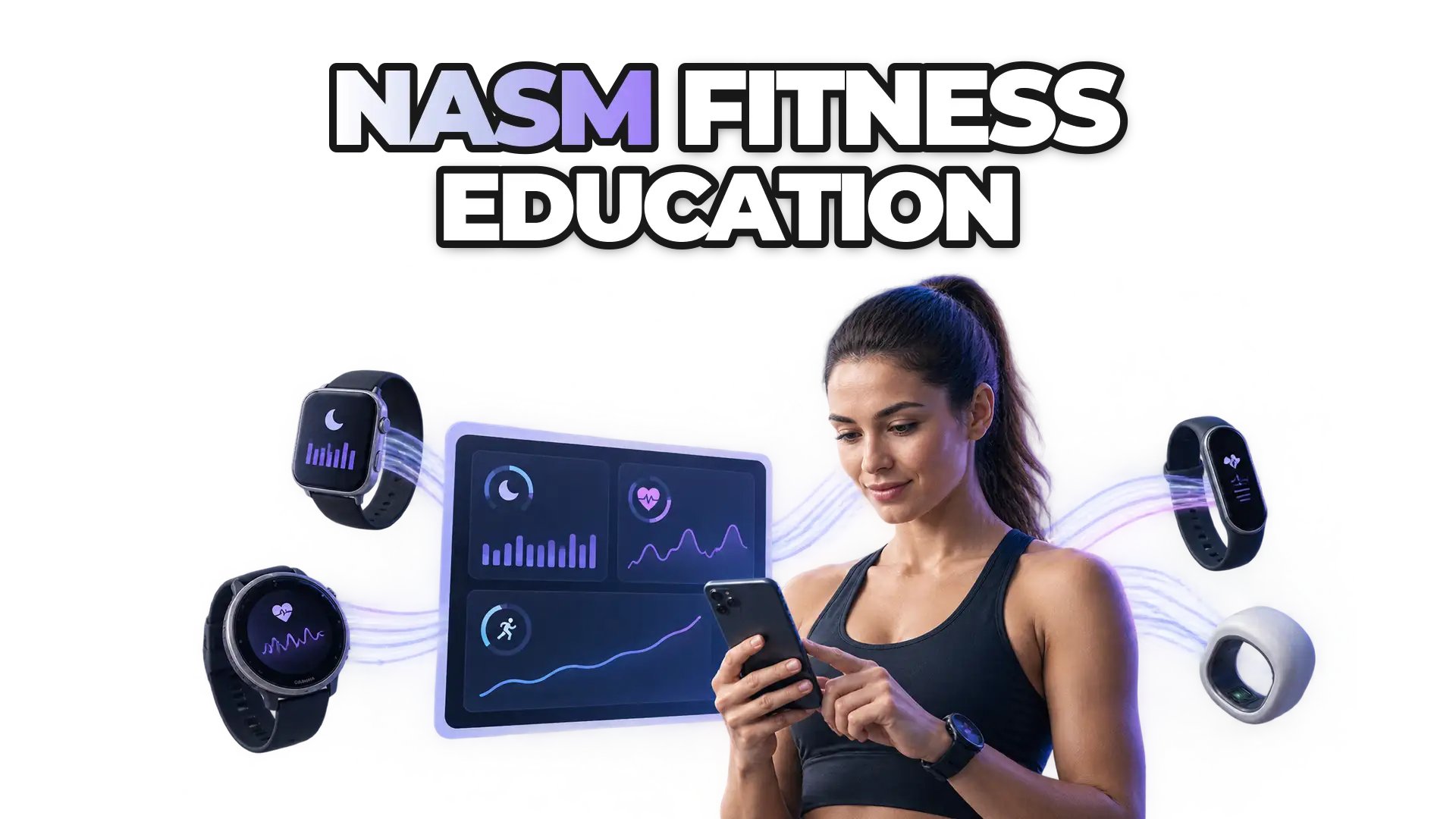
The National Academy of Sports Medicine (NASM) uses ROOK to bring normalized wearable data into its digital education and coaching tools. Through a single ROOK API, NASM accesses sleep quality, heart rate variability, energy expenditure and recovery trends from many wearable brands, and surfaces them in its Edge app and trainer dashboards, so fitness professionals see clients’ health and behavior outside training sessions.
NASM is a global provider of fitness and wellness education, certification and continuing education. For over 35 years, NASM has combined scientific research with real-world application to help personal trainers, health coaches and fitness professionals deliver evidence-based, client-focused results.
As NASM expands its digital learning and coaching ecosystem, the organization seeks ways to enhance its offerings with real-world health data.
What challenge did NASM face with wearable data?
NASM needed to incorporate wearable health data into its training programs and digital platforms as part of a strategy to give certified professionals data-informed coaching tools. Three challenges arose:
Aggregating reliable data across a variety of wearable device brands.
Standardizing and transforming health metrics to make them suitable for educational and coaching purposes.
Ensuring trainers and coaches could easily access relevant insights without wading through raw or fragmented data.
How did ROOK solve the wearable data challenge for NASM?
ROOK gave NASM a single API with consistent, normalized health data from 72 data sources and more than 500 devices. With ROOK, NASM was able to:
Embed real-world health and activity data into its educational and coaching tools.
Deliver contextual metrics such as sleep quality, heart rate variability, energy expenditure and recovery trends.
Equip fitness professionals with a more complete picture of their clients’ health and behaviors outside of training sessions.
Which ROOK features does NASM use?
Single API integration: unified access to wearable data across major device brands.
Transformed data: ROOK delivers data ready for use in coaching workflows.
Normalized data models: consistent formats for all supported metrics.
Flexible data delivery: integration within NASM’s Edge app and trainer dashboards.
What benefits did NASM get from ROOK?
Coaching tools: NASM professionals get client data they can act on in coaching.
Educational context: real-world metrics enrich NASM learning modules with up-to-date data.
Faster implementation: NASM avoided managing multiple APIs or raw data pipelines.
Engagement: trainers and trainees get a more personalized and connected experience.
What does the NASM case show about wearable data in fitness education?
The NASM case shows that one integration can bring wearable data into both education and coaching. By giving fitness professionals client data and real-world context, NASM continues building science-backed, technology-enabled programs for trainers and their clients. ROOK moves and standardizes the data; it does not diagnose or replace clinical judgment.
For a similar story, read how PEAR Health Labs uses ROOK for adaptive training, or explore the ROOK developer documentation.
 Written byDaniel MasDigital Marketing Lead