Blog
What is ROOKScore and how does it score health from 0 to 100?
ROOKScore turns activity, sleep and readiness data from ROOKConnect into a 0–100 score, adjusted for age, gender, weight and height.
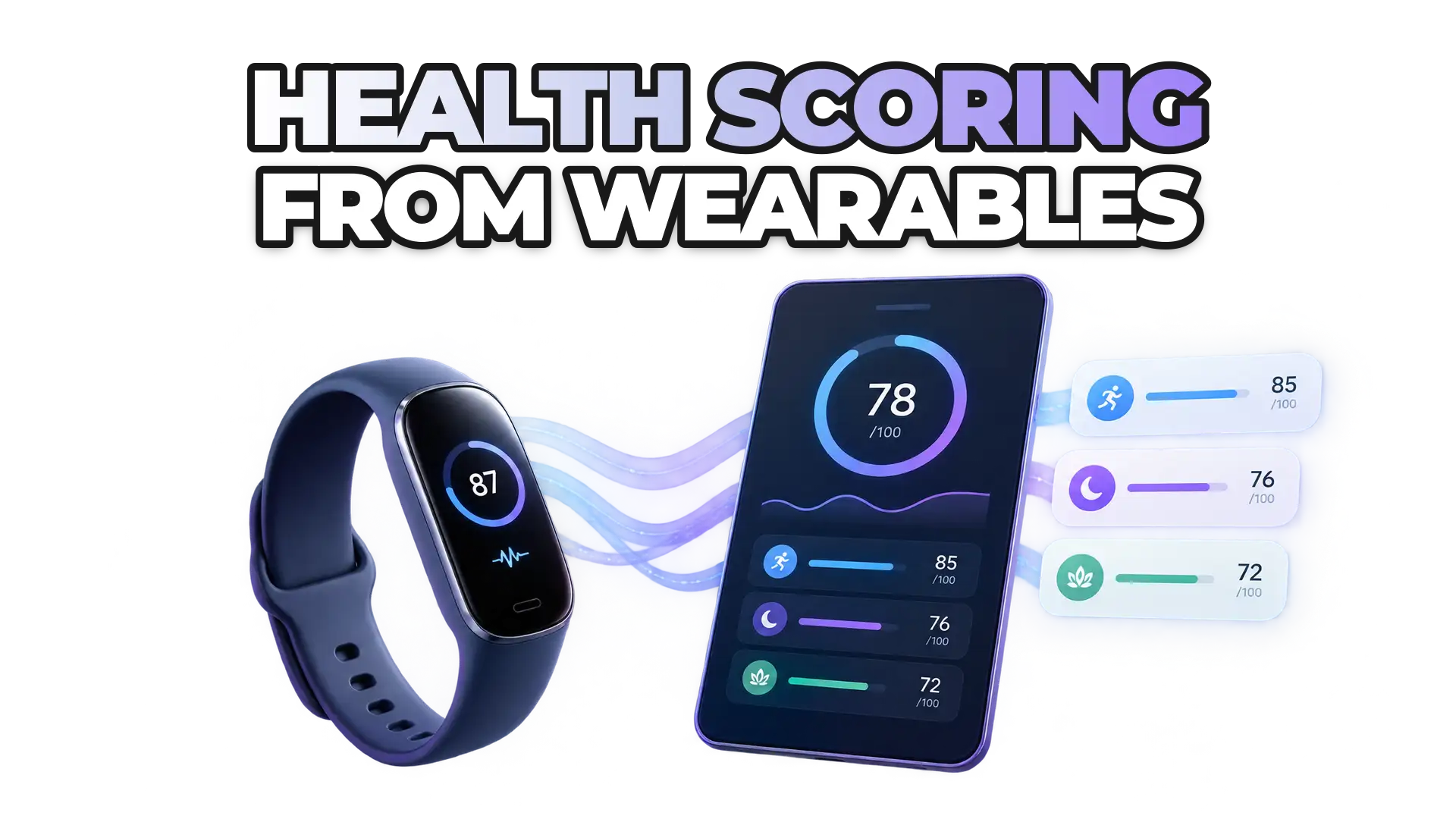
ROOKScore is a ROOK service that scores a user from 0 to 100 using data collected and supplied by ROOKConnect. It combines three inputs—activity, sleep and readiness—and personalizes the result with age, gender, weight and height. It returns a Global Score plus three paired scores, so users and products can track progress toward health goals.
ROOKScore evaluates a user’s health level from the data collected and supplied by ROOKConnect, on a scale where 0 represents poor and 100 excellent. ROOKScore is personalized: it takes into account age, gender, weight and height.
Which data inputs does ROOKScore use?
ROOKScore uses three data inputs: activity, sleep and readiness.
1. How is the activity score calculated?
The activity score is derived from physical health summaries and indicates the percentage of daily activity the user achieved. Age, gender, weight and height are used to calculate it.
Examples of Activity Metrics taken into consideration:
Recommended: Engage in at least 60 minutes a day of moderate to vigorous intensity physical activity, primarily aerobic. Alternatively, commit to 3 days a week of vigorous-intensity aerobic activities, including those strengthening muscles and bones.
Minimum: Aim for 150-300 minutes of moderate-intensity aerobic activities per week. Alternatively, target 75-150 minutes of vigorous-intensity aerobic activities per week.
Muscle-Strengthening: Recommended muscle-strengthening activities at moderate or greater intensity on at least 2 days a week. These activities should involve all major muscle groups.
Age Adjustments: For adults above 65, activity recommendations are adjusted to align with age-specific health goals.
2. What does the readiness score measure?
The readiness score reflects cardiac signals sourced from sleep health summaries. Its basic data requirements are age and gender.
Examples of Readiness Metrics taken into consideration:
Heart Rate Variability (HRV): HRV is a key factor in the readiness score. Higher HRV is generally associated with better adaptability to stress, and the scoring system uses HRV as a well-being signal.
3. What does the sleep score measure?
The sleep score, also derived from sleep health summaries, indicates the quality of the user’s sleep, with age as a key factor in the calculation.
Examples of Sleep Metrics taken into consideration:
The sleep score compares sleep against recommended hours for the user’s age class. Source: National Sleep Foundation.
Which output scores does ROOKScore return?
ROOKScore returns four output scores, each covering a different aspect of a user’s health:
Global Score: An average of scores from the activity, sleep, and readiness sections.
Activity-Readiness Score: An average of scores from the activity and readiness sections, offering an overview of physical activity and cardiac well-being.
Activity-Sleep Score: An average of scores from the activity and sleep sections, providing insight into physical activity and sleep quality.
Readiness-Sleep Score: An average of scores from the readiness and sleep sections, offering an overview of cardiac well-being and sleep quality.
These scores help users track progress toward their health goals.
ROOK moves and standardizes the data; it does not diagnose or replace clinical judgment.
Which standards guide ROOKScore’s health metrics?
ROOKScore’s metrics follow global health recommendations, such as those from the World Health Organization (WHO). The reliability of any health measurement also depends on biological variation and experimental error.
Why do health and performance fitness need different metrics?
Fitness has health and performance components—cardiovascular endurance, muscular strength, muscular endurance, flexibility and body composition—and the goals and standards for the general population and for athletes can differ, so metrics for each should be distinguished.
How could mental well-being fit into health scoring?
Mental well-being could be reflected through indicators such as stress levels, HRV analysis and mental health questionnaires, which give a more complete picture of a user’s overall health. ROOK aims to add more mental well-being information to ROOKScore.
Which new health measurements are emerging?
Emerging measurements include screen time, social media engagement and technology’s impact on mental health, as well as glucose levels, body composition and water percentage, which point toward more comprehensive and personalized health monitoring. ROOK is considering or already incorporating these factors into ROOKScore.
What does ROOKScore offer users and organizations?
ROOKScore gives users and organizations one personalized view of activity, sleep and readiness, built on global health recommendations. By seeing how those three inputs interact, users can follow their progress toward a healthier routine.
Each business takes its own approach, and ROOK can work with you on a Health Score tailored to your needs. Contact ROOK about a custom Health Score, or see how scores are built from standardized data in ROOK’s approach to actionable wearable data.
 Written byJonas DückerCMO | COO