Blog
How Do ROOK Datasets Help You Plan a ROOK Integration?
ROOK Datasets on GitHub show how wearable data looks in ROOK, so teams can map data, plan visualizations and spot gaps before integrating.
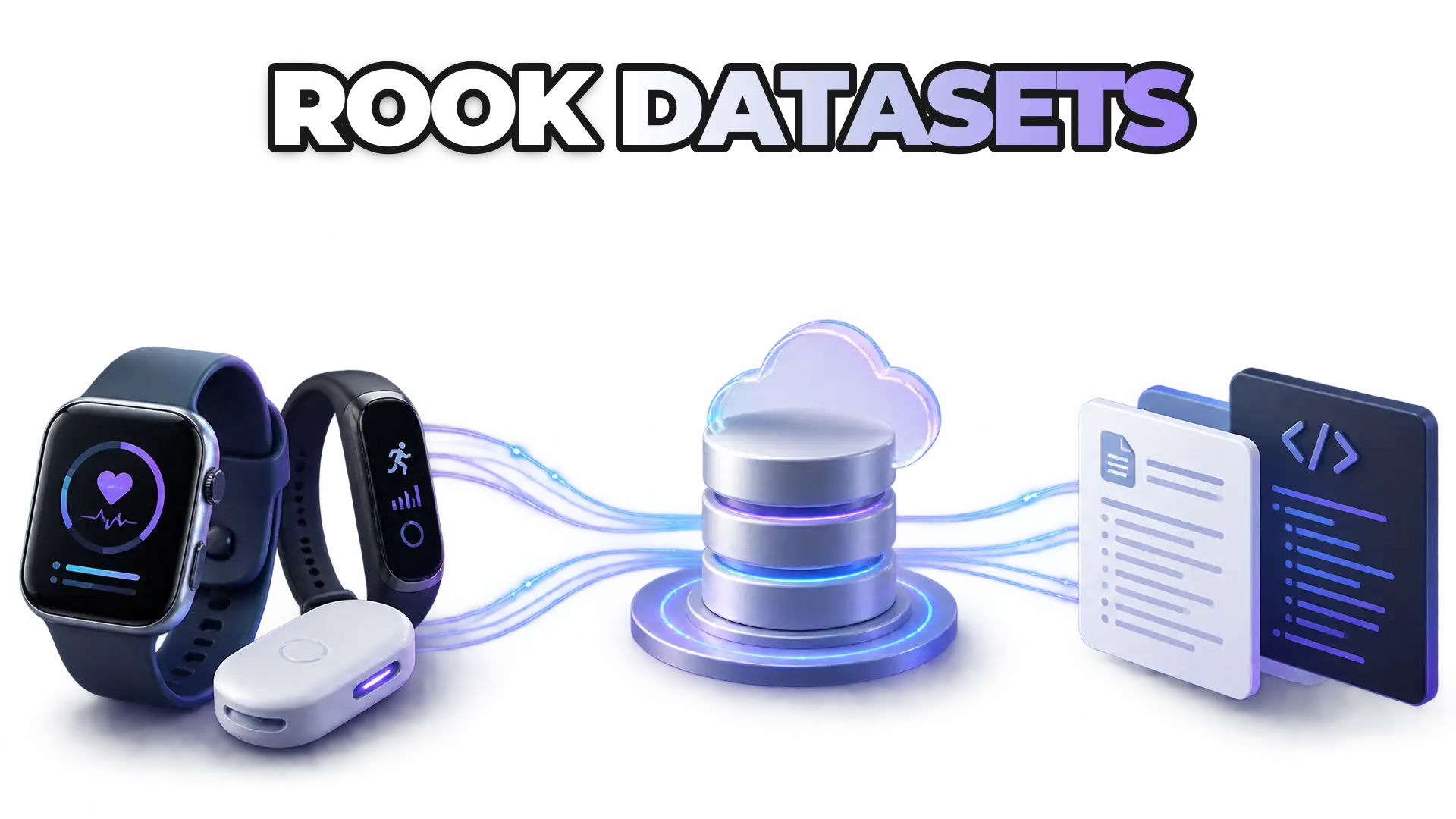
ROOK Datasets help you plan a ROOK integration by showing, before you write code, how data from different wearables is translated and represented in ROOK. Hosted openly on GitHub in a standardized format with documentation, the datasets let developers and product teams map the data, plan visualizations, identify gaps or inconsistencies, and define the workflow needed to work with ROOK data.
By examining ROOK Datasets, developers and product teams can:
- Map the data: Understand how data from different sources is translated and represented in ROOK.
- Plan visualizations: Determine what types of charts and metrics are possible with the available data.
- Identify potential challenges: Detect any inconsistencies or gaps in the data that might affect integration.
- Optimize the workflow: Define the processes and tools needed to work efficiently with ROOK data.
What do ROOK Datasets include?
Wide range of datasets: The ROOK Datasets repository includes data from numerous wearable devices, covering metrics such as heart rate, activity levels and sleep, which allows cross-device comparisons.
Standardized format: All ROOK Datasets use a standardized format, which reduces the time spent on data preprocessing when integrating data into applications or research projects.
Regular updates: ROOK updates the datasets to include data from newly supported devices.
Open-source access: ROOK Datasets are hosted on GitHub and freely available to the community, encouraging collaboration and transparency.
Detailed documentation: Each dataset comes with documentation, including data descriptions, usage examples and integration guidelines.
Who benefits from ROOK Datasets?
For developers: ROOK Datasets reduce the development time needed to integrate wearable health data into applications.
For researchers: ROOK Datasets provide a rich source of health data for studies and analyses.
For companies: ROOK Datasets help you use wearable data insights to improve your products or services. For how that data is structured, see ROOK's wearable health data structure explained.
How do you get started with ROOK Datasets?
To begin, visit the ROOK Datasets GitHub repository, where you will find all available datasets with documentation and integration instructions.
How can you contribute to ROOK Datasets?
Developers, researchers and companies can share feedback, contribute to the repository and collaborate with others working on health data integration.
For more information, read the ROOK developer documentation or explore the rook-data-datasets repository on GitHub.
 Written byJonas DückerCMO | COO