Blog
How Does Wearable Data Give Digital Health a Competitive Edge?
Wearable data becomes a competitive edge when digital health, wellness and insurance products turn it into decisions: monitoring, adaptive training and risk segmentation.
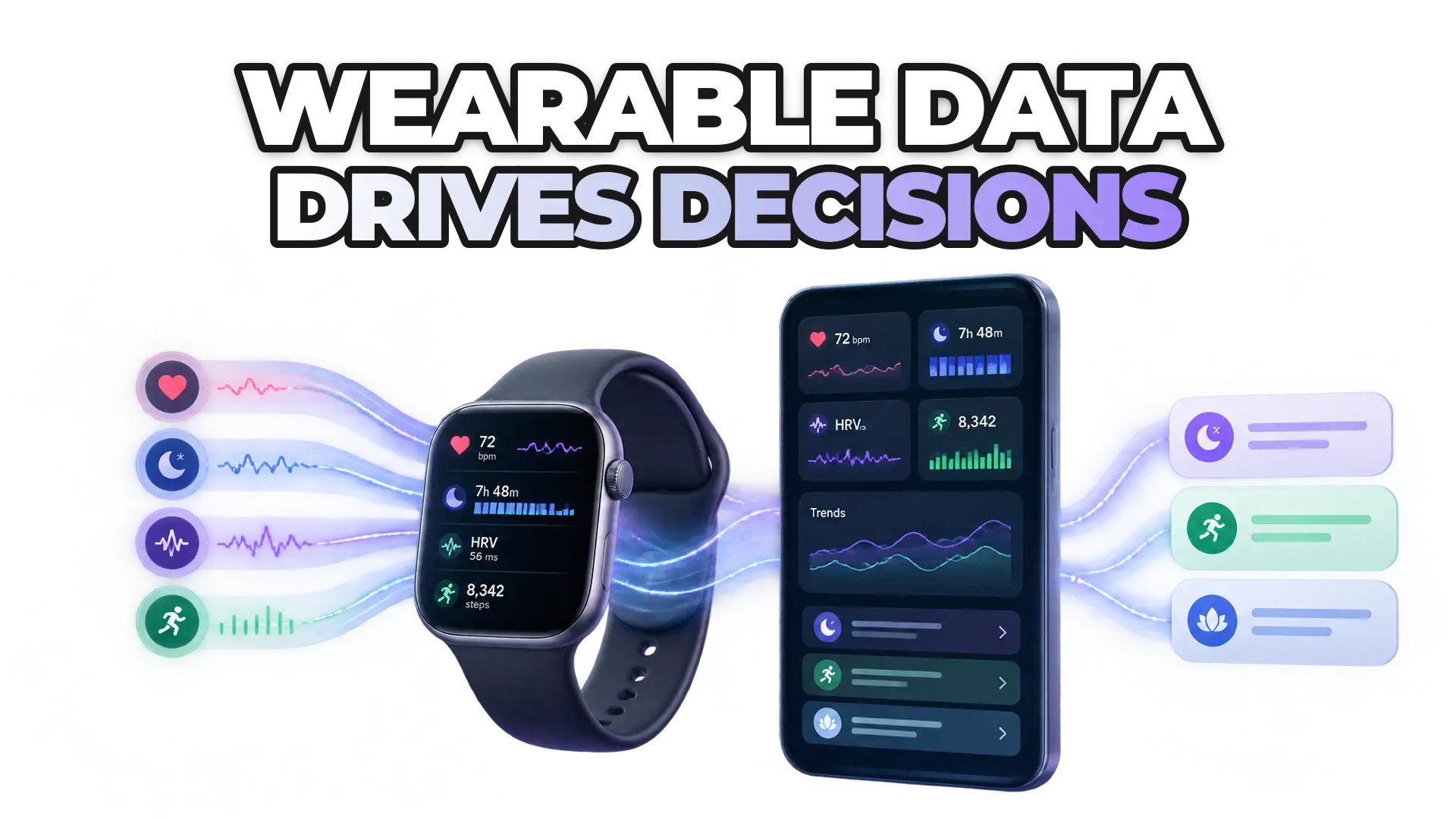
Wearable data gives a digital health product a competitive edge when the product acts on it, not just collects it. Integrated heart rate, sleep, HRV and activity data lets digital health apps follow up between appointments, wellness platforms adapt training to each user's daily state, and insurers segment risk on real behavior. The result is faster decisions, higher engagement and differentiation through utility.
In connected health, wearable data is no longer just a complementary source of information. Digital health apps, corporate wellness platforms and personalized insurance products that integrate continuous user data are building more adaptive and more valuable products.
What changes when wearable data drives decisions instead of sitting passively?
Wearable data creates value when it is integrated, analyzed and converted into decisions that improve experience, operational efficiency and clinical or commercial outcomes. Wearables collect many data points per user each day: heart rate, sleep, stress levels, steps, activity, body temperature, heart rate variability (HRV) and more.
In other words, measuring is not enough; the product has to act on what it measures.
How does wearable data create value in digital health, wellness and insurance?
Wearable data creates different value in each industry: closer follow-up in digital health, adaptive experiences in wellness and fitness, and behavior-based products in insurance.
Digital health
- Continuous remote monitoring: enables more accurate follow-up between appointments
- Timely interventions: automated alerts for clinicians and users based on recent signals
- Personalized care plans: adjusted to the patient's actual sleep, recovery or activity patterns
ROOK moves and standardizes the data; it does not diagnose or replace clinical judgment.
Wellness and fitness
- Adaptive training: workouts that align with the user's physiological state each day
- Personalized recommendations: for nutrition, rest or activity based on biometric patterns
- Improved retention: personalized experiences lead to longer engagement
Insurance
- Dynamic pricing models: premiums that adjust based on healthy behavior
- Risk segmentation based on real behavior: beyond forms and static clinical history
- New product lines: wellness programs embedded into insurance offerings
Why does acting on wearable data create a lasting competitive edge?
Acting on wearable data creates a lasting edge because it compounds: earlier decisions, stronger loyalty and features competitors cannot copy by redesigning a screen.
- Faster time to value: companies that activate wearable data quickly make better decisions sooner
- User retention and engagement: products that understand and adapt to users earn loyalty
- Differentiation through utility, not just design: well-used data becomes a strategic feature
- Smarter resource allocation: targeted interventions reduce waste and increase efficiency
How does ROOK help products activate wearable data?
ROOK provides the infrastructure to use wearable data without building and maintaining each integration from scratch.
- One integration for 72 data sources and more than 500 devices
- Clean, normalized data streams
- ROOK operates under a HIPAA-aligned security program, signs BAAs with covered entities, and processes EU personal data under GDPR as a data processor.
- Low-friction control directly from the ROOK Portal
With ROOK, partners get a scalable way to turn integration complexity into strategic advantage. For how the data is standardized, read what makes wearable health data actionable.
Is using wearable data strategically now essential?
Yes. As the health and wellness landscape evolves, using wearable data strategically is a defining factor for differentiation and long-term success. Whether the product is a personalized care plan, a dynamic insurance model or an adaptive wellness experience, the value lies in turning raw signals into real outcomes. To try it with test data, open the ROOK Portal sandbox.
 Written byDaniel MasDigital Marketing Lead