Blog
How did Physmodo add wearable data to movement analysis with ROOK?
Physmodo used ROOK's single API to add standardized sleep, heart rate, activity and energy data to its AI movement assessments.
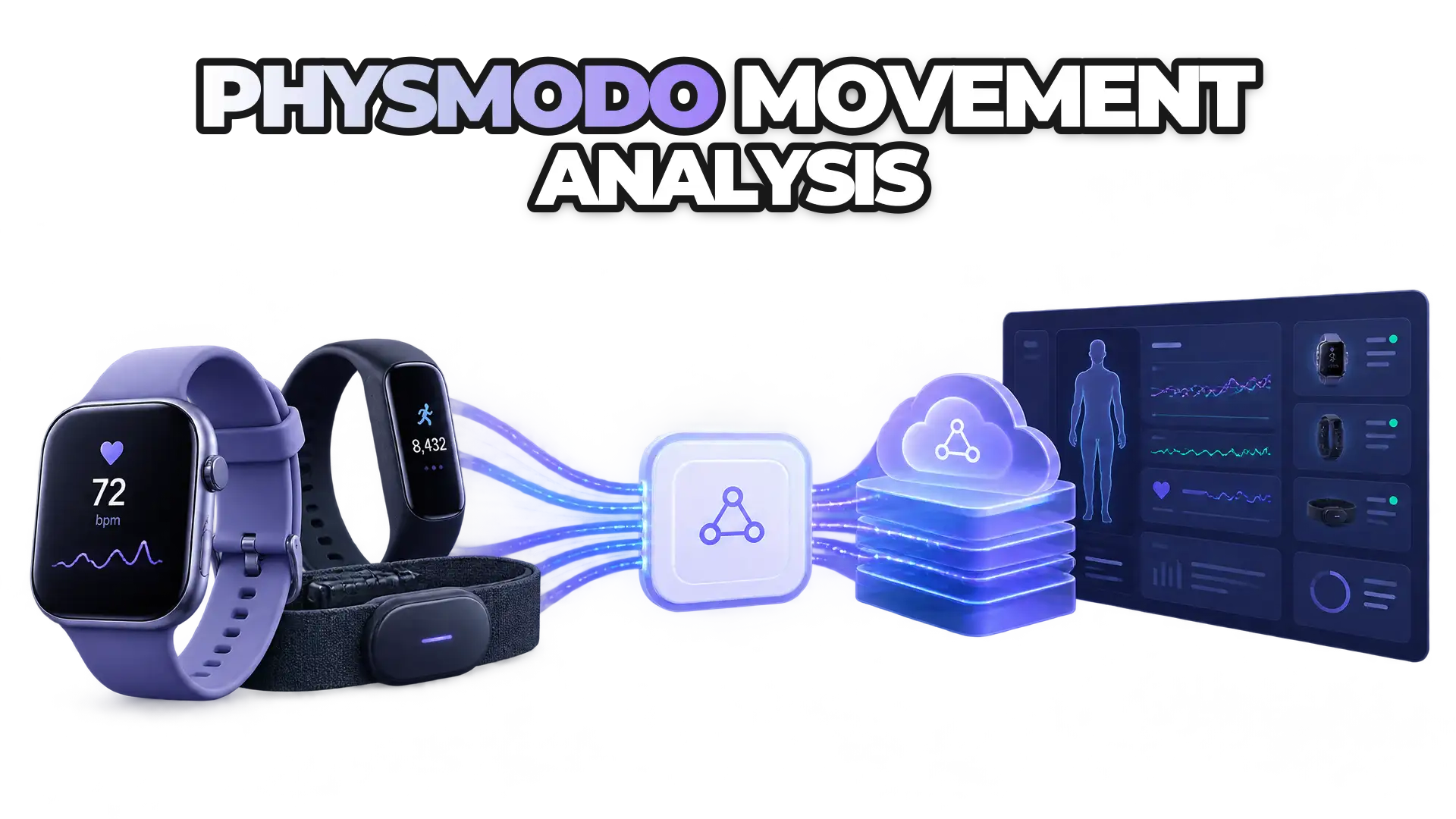
Physmodo builds AI-powered movement assessments that evaluate a movement in under 30 seconds. To add physiological context, Physmodo integrated ROOK Connect, one API that delivers standardized sleep, heart rate, activity and energy expenditure data from many wearable brands. Physmodo reports 5 times faster development and integration and a readiness score that combines biomechanics with biometrics, without managing each device connection itself.
Physmodo’s patented platform is used by gyms, clinics, performance and longevity centers, and employers. It aims to identify mobility limitations with two goals: prevent injuries and improve performance.
What challenge did Physmodo need to solve?
Physmodo wanted to enrich its movement analysis with physiological and activity data, so users get a more accurate picture of their readiness. The main challenges were:
Integrating data from multiple wearable brands: Physmodo needed data from different wearables without managing each device connection.
Standardizing large volumes of raw data: disparate data had to become clean inputs for Physmodo’s movement models.
Accessing data without friction: health data had to arrive without interrupting the user experience.
How did ROOK solve it?
ROOK gave Physmodo one integration to 72 data sources and more than 500 devices through a single API. With ROOK, Physmodo:
- Got standardized data on sleep, heart rate, activity and energy expenditure.
- Removed the need to manage multiple integrations, saving time and resources.
- Focused on its movement analysis models instead of wearable data infrastructure.
Which ROOK features did Physmodo use?
- A unified API for data from multiple wearables.
- Normalized data models ready for analysis.
- Data synchronization from connected devices.
- Compatibility with 72 data sources and more than 500 devices.
What results did Physmodo get?
Time savings: 5 times faster development and integration.
Broader coverage: support for over 400 device models without modifying infrastructure.
Enriched context: a readiness score combining biomechanics and biometrics.
Better user experience: less friction and shorter setup time.
What does the Physmodo case show?
Physmodo added contextual wearable data to its movement assessments while keeping its team focused on movement analysis. The case shows how standardized data from one integration can enrich a product without building per-device connections; the trade-offs are covered in building wearable integrations versus using ROOK.
ROOK moves and standardizes the data; it does not diagnose or replace clinical judgment.
To see the data models Physmodo works with, read the ROOK developer documentation.
 Written byDaniel MasDigital Marketing Lead