Blog
How Does Novos Labs Use Wearable Data for Longevity with ROOK?
Novos Labs added continuous wearable data to its NOVOS Life longevity app through ROOK's API, pairing sleep, activity and heart data with biological tests.
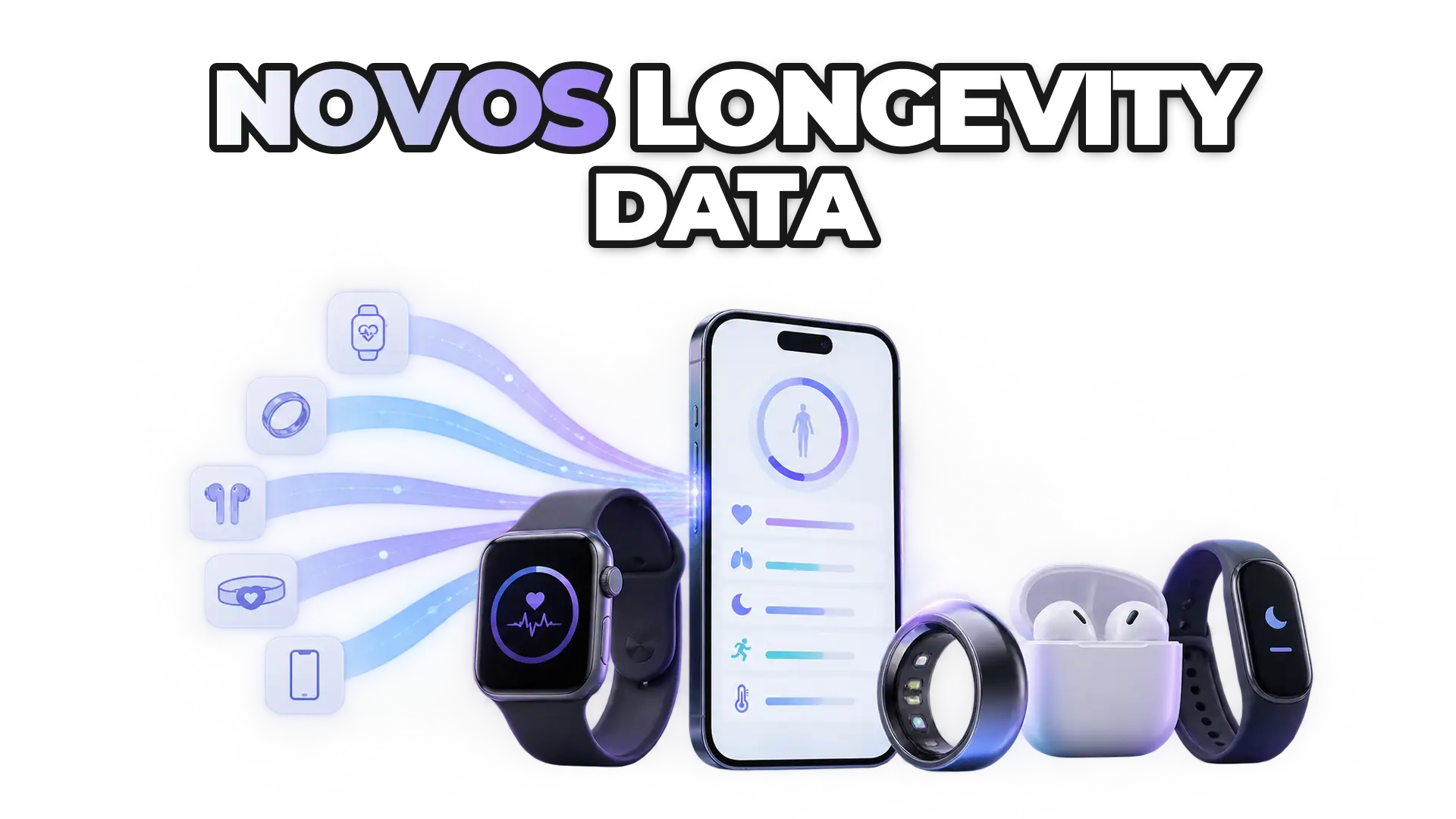
Novos Labs uses ROOK's API to bring continuous wearable data into NOVOS Life, its longevity app. Biological test results gave snapshots of aging markers; ROOK adds day-to-day context such as sleep quality, steps, resting heart rate and energy expenditure, normalized across device brands and synced daily. Novos Labs cross-references both data sets to deliver more personalized longevity insights without manual data entry.
Novos Labs is a science-based company focused on helping individuals take control of their aging process. Through its app, NOVOS Life, the company provides personalized insights, biological age tracking and lifestyle recommendations backed by clinical research and molecular science.
By combining supplement formulations, at-home biological tests and data-driven guidance, Novos Labs helps users live longer, healthier lives, with a commitment to evidence-based interventions.
What problem did Novos Labs need to solve?
Novos Labs needed continuous, real-world health data to improve the accuracy and personalization of NOVOS Life. Biological test results provided valuable snapshots of aging markers but lacked day-to-day context such as sleep patterns, physical activity and heart rate variability, all of which play a role in aging trajectories.
Key challenges for Novos Labs included:
- Aggregating wearable data from a wide range of device brands.
- Standardizing health metrics for consistent interpretation and trend analysis.
- Enriching biological age tracking with lifestyle context, without requiring users to manually input data.
How did ROOK solve it for Novos Labs?
Novos Labs integrated ROOK's API to bring normalized wearable metrics directly into NOVOS Life. ROOK Connect covers 72 data sources and more than 500 devices, giving Novos Labs one integration for building a comprehensive health profile for each user.
The ROOK integration allowed the Novos Labs team to:
- Automatically sync relevant health data, such as sleep quality, steps, resting heart rate and energy expenditure.
- Cross-reference wearable data with biological test results to look for deeper correlations.
- Deliver more personalized longevity insights to users, based on both biological and behavioral data.
Which ROOK features does Novos Labs use?
- Unified wearable integration: one API to access data from wearable and health platforms.
- Normalized metrics: standardized formats across sleep, activity, heart rate and energy data.
- Continuous data sync: daily updates to enrich user health profiles.
- Structured data: pre-processed data ready for longevity modeling.
What results did Novos Labs see?
- Holistic view of aging: combining biological test data with real-world behavioral data gave Novos Labs deeper insight into aging processes.
- Reduced user friction: wearables feed data into NOVOS Life automatically, with no manual entry.
- Faster product development: Novos Labs focused on features instead of building integrations.
- Stronger user engagement: users received timely, personalized feedback based on their daily habits.
What does the Novos Labs case show?
The Novos Labs case shows that continuous wearable data can enrich a longevity platform without adding integration complexity. By combining biological testing with daily wearable data, Novos Labs offers users a more complete, data-driven view of aging to inform their decisions. ROOK moves and standardizes the data; it does not diagnose or replace clinical judgment. For a related pattern, read how wearable and blood test data work together, or try the integration in the ROOK sandbox.
 Written byDaniel MasDigital Marketing Lead