
The Real Problem Isn’t Wearables — It’s Data Chaos
Wearable data integration fails when fragmented formats, inconsistent metrics, and disconnected APIs prevent companies from turning health data into reliable decisions.
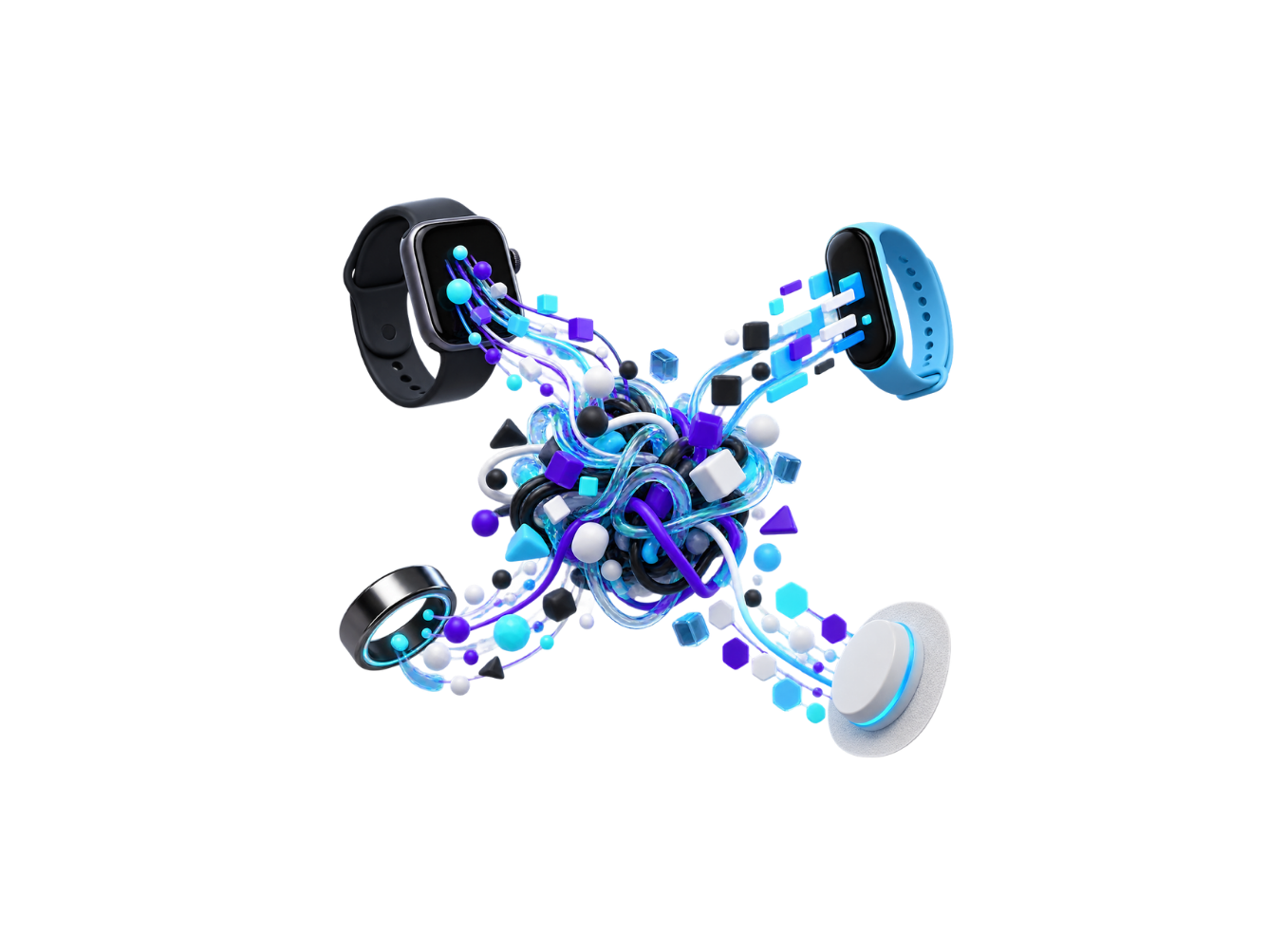
Wearables are not suffering from a data shortage. They are suffering from a standardization problem.
Smartwatches, rings, continuous glucose monitors, fitness trackers, and connected medical devices now generate enormous volumes of health data. They measure heart rate, sleep, physical activity, stress, glucose, oxygen saturation, body composition, and many other signals throughout the day.
This should make it easier for digital health companies to build personalized, preventive, and data-driven products.
But collecting wearable data is only the first step. Before that data can support a health score, an AI model, a remote patient monitoring program, or a personalized recommendation, it must be connected, cleaned, standardized, synchronized, and interpreted correctly.
The real problem is not wearables. It is the data chaos created when hundreds of devices speak different languages.
What Is Wearable Data Chaos?
Wearable data chaos is the fragmentation that occurs when health data from different devices cannot be compared, combined, or used consistently.
Every wearable provider has its own ecosystem, including proprietary APIs, authorization methods, data models, metric definitions, sampling frequencies, timestamps, and synchronization rules.
For example:
Garmin may structure activity and recovery data differently from Fitbit.
Oura may calculate sleep and readiness metrics using its own algorithms.
Apple Health and Health Connect aggregate information from multiple applications and devices.
Dexcom generates continuous glucose data with a very different frequency and context from a consumer fitness tracker.
Even when two devices report the same metric, they may not mean exactly the same thing. A “sleep score,” “active calorie,” or “resting heart rate” value can be calculated differently depending on the manufacturer.
The differences usually appear in four areas:
Units and naming conventions
Metric definitions and proprietary calculations
Sampling frequency and data granularity
Payload structure, timestamps, and synchronization behavior
This is why access to more devices does not automatically create better health intelligence. Companies first need a consistent data layer that makes those sources usable together.
Teams evaluating coverage should begin by reviewing the wearable devices and health data sources supported by ROOK. This makes it easier to understand which integrations, data types, and connection methods are available before designing a product workflow.
Why Is Wearable Data Integration So Difficult?
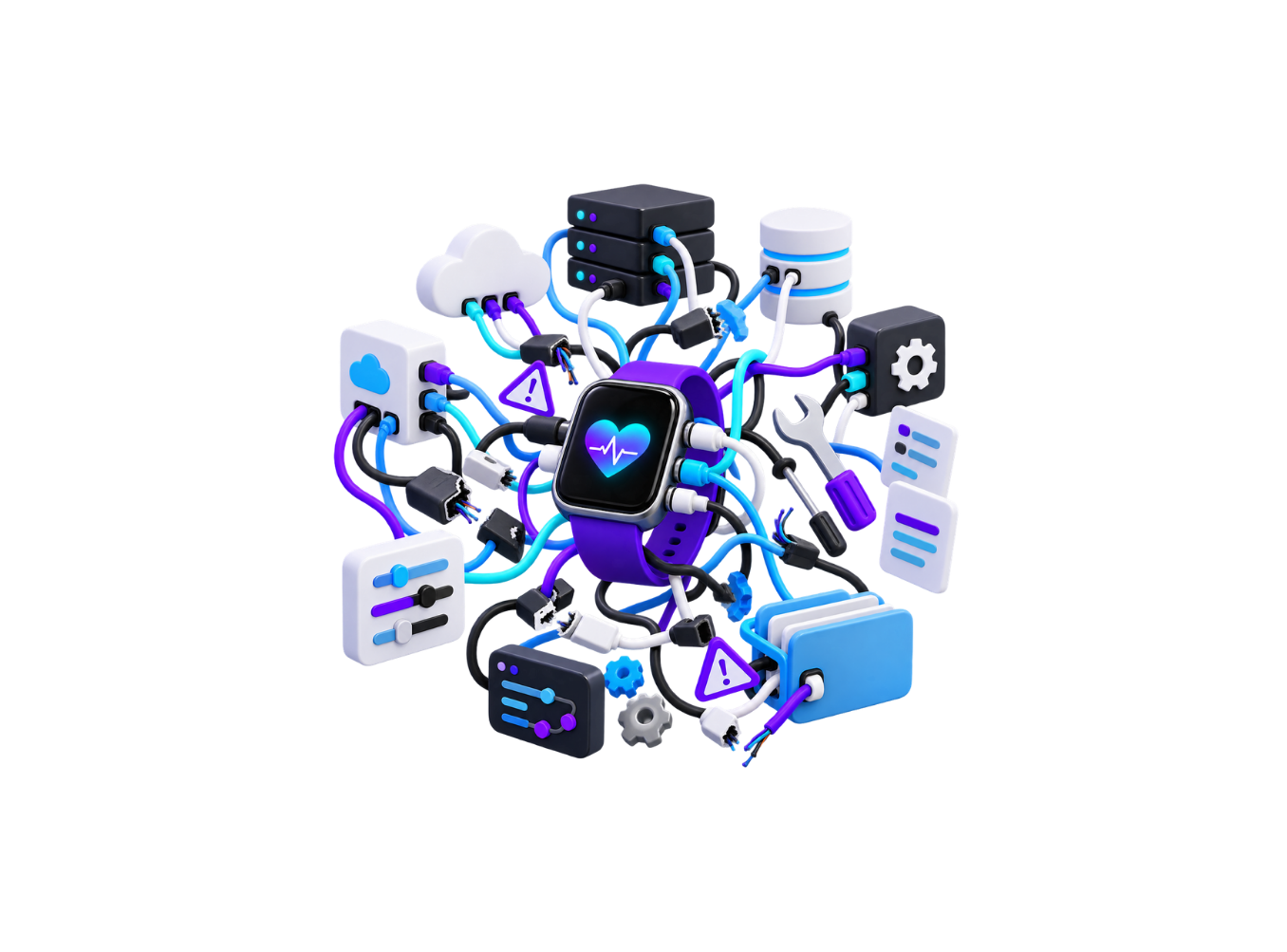
Wearable data integration is difficult because connecting an API does not solve the differences between the data generated by each provider.
Many companies begin with a seemingly simple requirement: connect Garmin, Fitbit, Oura, Apple Health, or another popular source. The first integration may be manageable. The complexity becomes visible when the product needs to support multiple providers at scale.
Each direct integration can require:
Custom authentication and authorization flows
Provider-specific data extraction logic
Different transformation and validation rules
Historical and real-time synchronization
Webhook monitoring and retry mechanisms
Continuous maintenance when an API changes
Logic for duplicates, missing values, and edge cases
The technical burden grows with every source. Engineering teams eventually spend more time maintaining integrations than building the product experiences customers actually use.
ROOK’s health data integration documentation for ROOKConnect explains how authorization, extraction, processing, normalization, and delivery can be handled through a unified infrastructure instead of separate provider-by-provider pipelines.
For companies that need a faster mobile implementation, the ROOK App and Extraction App documentation describes a prebuilt approach for connecting SDK-based data sources such as Apple Health and Health Connect.
The Hidden Business Cost of Fragmented Health Data
Wearable integration complexity is not only an engineering problem. It affects product velocity, operating costs, customer experience, and the reliability of every decision built on top of the data.
When data pipelines are fragmented, companies face several hidden costs.
1. Slower Product Development
Engineering teams must build and test similar functionality repeatedly for every provider. A new device request can delay features that generate more direct value for users.
2. Higher Maintenance Costs
Third-party APIs evolve. Authentication flows change, fields are deprecated, rate limits shift, and providers modify how data is delivered. Every direct integration becomes a long-term maintenance commitment.
3. Inconsistent User Experiences
If a product interprets data differently depending on the connected device, users may receive inconsistent scores, alerts, or recommendations.
4. Limited Scalability
A point-to-point integration model may work for two or three sources. It becomes increasingly difficult to manage when a platform needs broad device coverage across thousands or millions of users.
These challenges affect multiple sectors. ROOK’s health data use cases across fitness, healthcare, insurance, corporate wellness, and pharma show how standardized data infrastructure supports different workflows without rebuilding the integration layer for every application.
Why Data Quality Determines Product Reliability
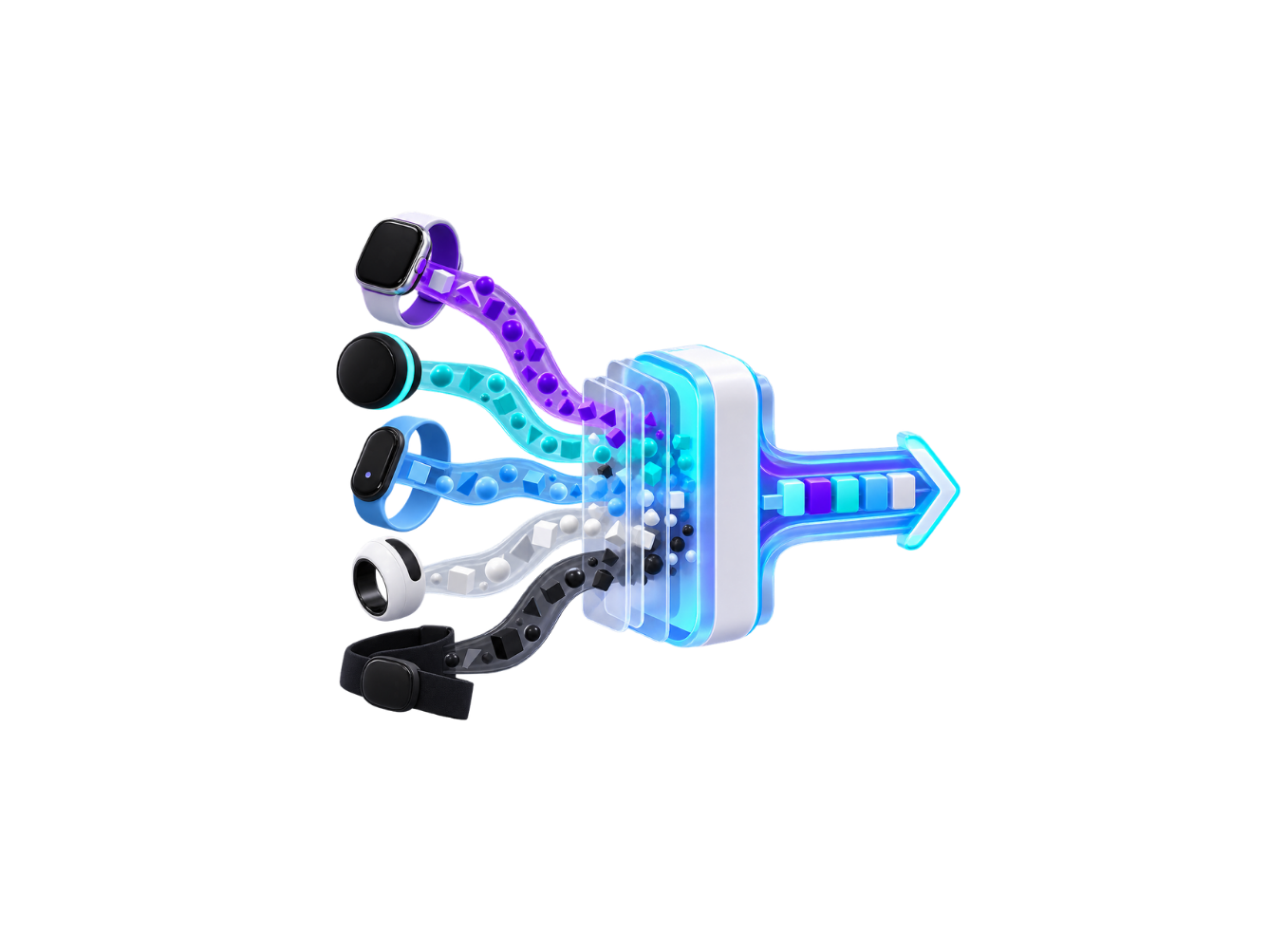
Reliable digital health products depend on reliable inputs.
This matters whether a company is trying to:
Build a health score
Launch a remote patient monitoring program
Train a health-focused AI model
Detect changes in recovery or activity
Produce personalized recommendations
Generate alerts for a care or coaching team
Before data can support any of these use cases, it should be normalized, standardized, validated, deduplicated, and aligned by time.
If those steps are missing, an application may compare incompatible measurements, treat duplicated events as new information, or generate insights from incomplete timelines.In digital health, poor data quality does not simply reduce accuracy. It can reduce trust and introduce risk into every downstream system.
Health scores demonstrate why the data layer matters. The ROOKScore implementation guide shows how standardized physical, sleep, and body data can be converted into consistent assessments instead of disconnected device metrics.
Interoperability Is the Real Wearable Data Challenge
The biggest barrier to wearable innovation is no longer sensor availability. It is health data interoperability.
Interoperability means that data from different sources can be exchanged, understood, and used consistently by another system. In practical terms, companies need to:
Connect multiple wearable and health data sources
Translate provider-specific payloads into a common schema
Preserve timestamps, source information, and context
Maintain consistent units and definitions
Deliver data reliably through APIs or webhooks
Scale the infrastructure without rebuilding every connection
This is the difference between data access and data usability.
A company may technically have access to heart rate, sleep, or activity data. But if the values cannot be compared across devices or trusted over time, they cannot reliably support automation, analytics, or clinical workflows.
This problem is explored further in ROOK’s conversations on wearable data fragmentation, API innovation, and health technology. Related podcast and media archives also provide perspectives on turning wearable signals into usable health information and building scalable products with connected health data.
The Missing Layer: Unified Health Data Infrastructure
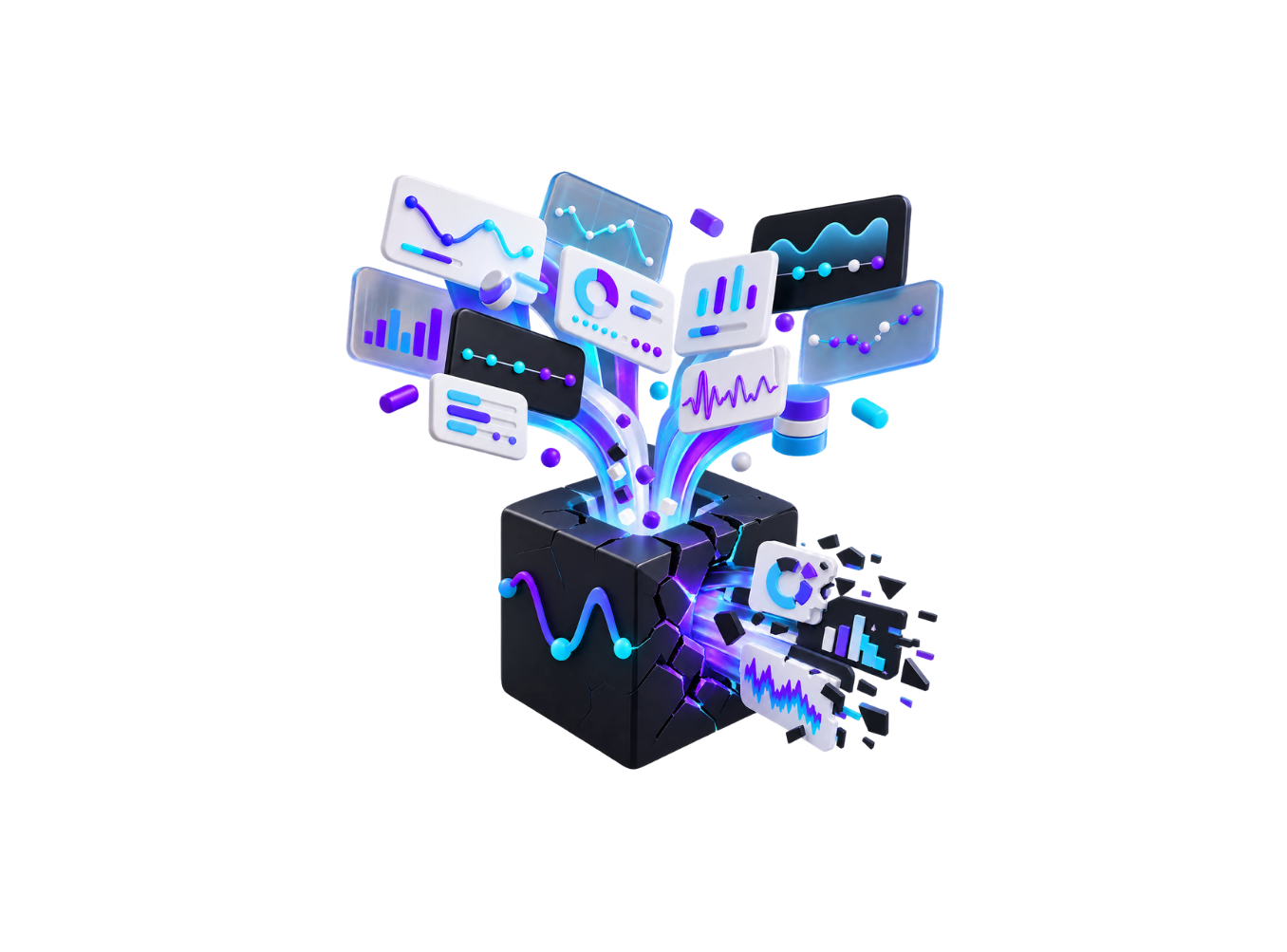
What the wearable ecosystem needs is a middleware layer between data sources and the applications that use them.
This layer should absorb the complexity of individual integrations and transform fragmented inputs into consistent, usable health data.
That infrastructure must do more than provide a single API endpoint. It should manage the complete data lifecycle:
Authorize access with user consent.
Extract historical and recent data from each source.
Validate and normalize provider-specific payloads.
Standardize the data into a unified schema.
Deliver it reliably to the application.
Monitor and maintain the underlying integrations over time.
With this foundation in place, product teams can focus on experiences, intelligence, and outcomes rather than connector maintenance.
How ROOK Turns Fragmented Data Into Actionable Intelligence
ROOK provides health data infrastructure that connects and standardizes information from wearables and other health data sources.
Instead of requiring every company to build and maintain separate pipelines, ROOK creates a unified layer for accessing structured health data.
ROOK helps teams:
Integrate multiple wearable providers through APIs and SDKs
Normalize units, fields, and data structures
Organize physical, sleep, and body health data consistently
Receive standardized data through webhooks or REST APIs
Reduce provider-specific development and maintenance
Build products on a data model designed to scale
The result is consistent data regardless of the original source, faster integration timelines, lower technical complexity, and a stronger foundation for analytics and AI.
For ongoing guidance, the ROOK health data blog covers wearable APIs, interoperability, data standardization, digital health, and connected-health product development.
From Wearable Data to Better Decisions
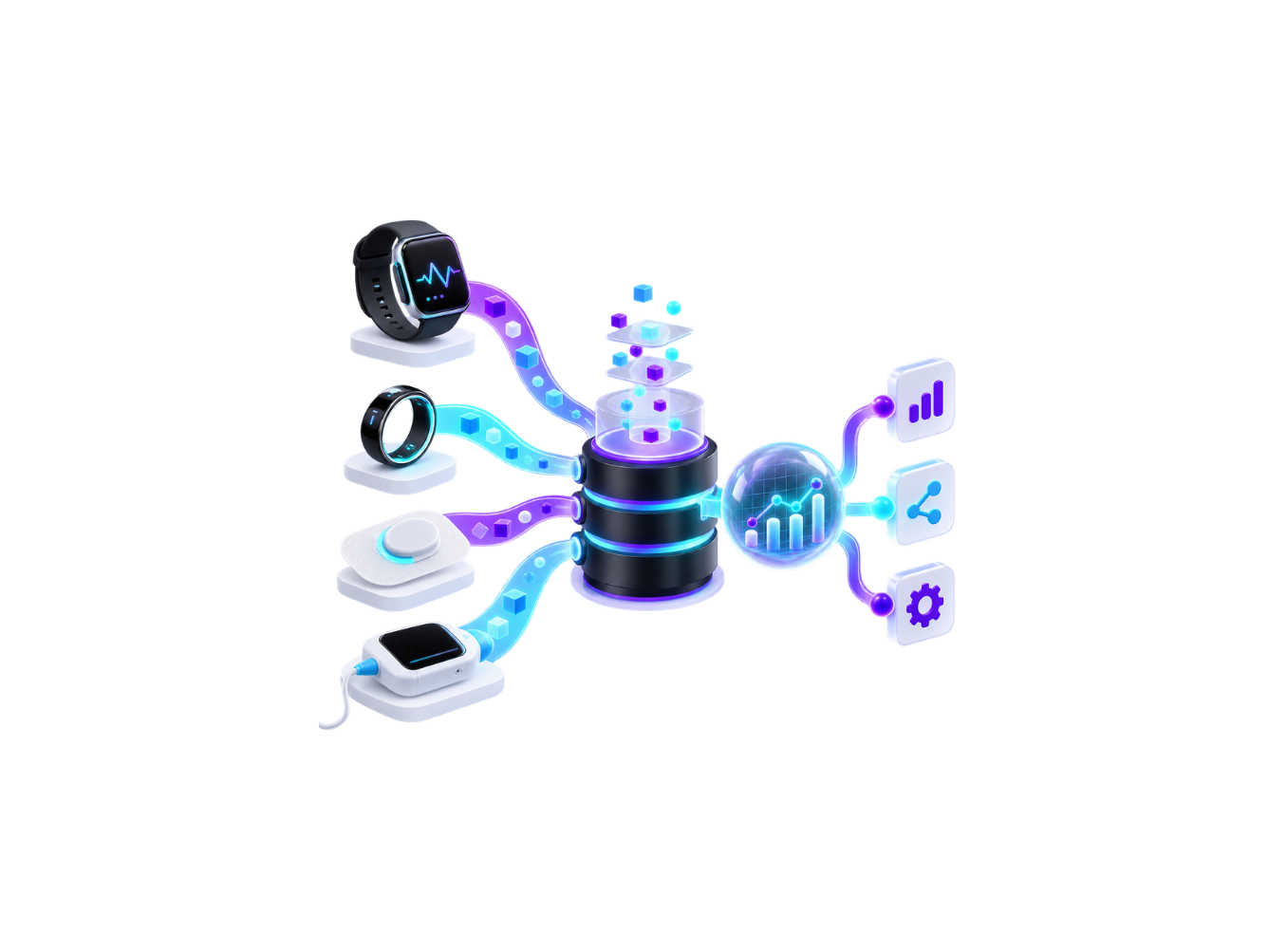
Once health data is standardized and reliable, companies can move beyond displaying disconnected metrics.
They can build systems that:
Generate consistent health and recovery scores
Monitor changes in activity, sleep, and physiology
Power remote patient monitoring workflows
Improve AI models with structured inputs
Create meaningful alerts and recommendations
Personalize experiences across different devices
This is the transition from collecting data to using data — and from dashboards to decisions.
The competitive advantage in connected health will not belong to the company that collects the most data. It will belong to the company that can transform data into trusted, timely, and actionable intelligence.
Frequently Asked Questions About Wearable Data Integration
What Is Wearable Data Integration?
Wearable data integration is the process of connecting smartwatches, fitness trackers, rings, continuous sensors, and health platforms to an application so their data can be extracted, standardized, and used consistently.
Why Is Wearable Data Difficult to Standardize?
Wearable providers use different schemas, units, definitions, algorithms, timestamps, and sampling frequencies. Standardization translates these differences into a common structure while preserving the source and context of each measurement.
What Is a Wearable API?
A wearable API allows an application to request or receive data from a wearable provider. A unified wearable API reduces the need to build a separate integration and data model for every provider.
How Does Data Normalization Improve Digital Health Products?
Data normalization makes measurements from different sources more consistent. It supports more reliable analytics, health scores, AI models, alerts, and personalized experiences.
Can Wearable Data Be Used for AI and Remote Patient Monitoring?
Yes, but the data must be sufficiently complete, standardized, time-aligned, and validated for the intended use. AI and remote monitoring systems are only as reliable as the data pipelines supporting them.
How Does ROOK Simplify Wearable Data Integration?
ROOK connects multiple health data sources and converts provider-specific inputs into a unified data model. It manages extraction, normalization, standardization, and delivery so product teams can focus on building applications and insights.
Conclusion: Wearables Are the Opportunity; Data Chaos Is the Obstacle
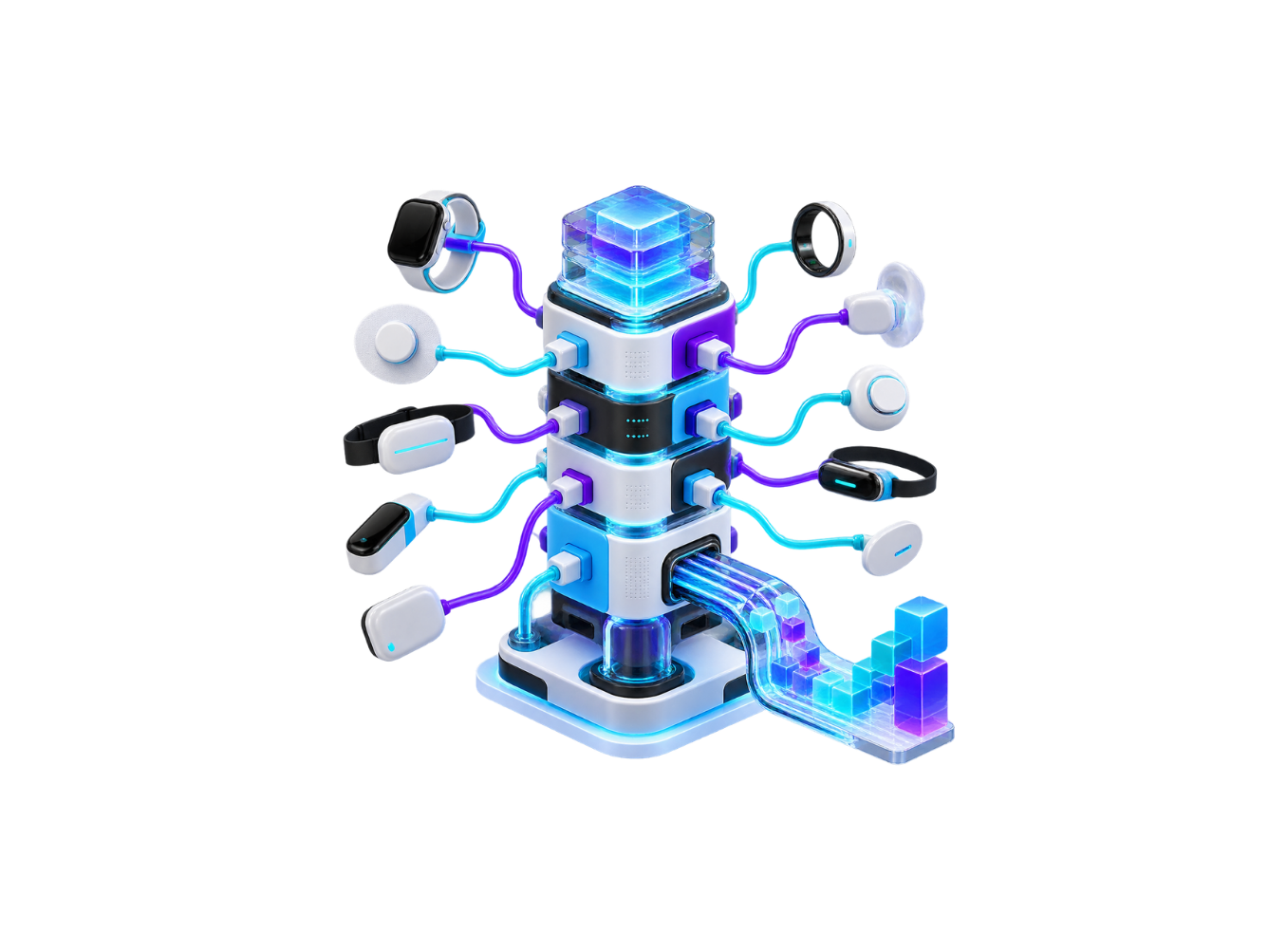
Wearables are not the problem. They are one of the most important sources of continuous health information available today.
The real challenge begins after the data is collected.
Fragmented formats, inconsistent definitions, disconnected APIs, and ongoing maintenance prevent many companies from turning wearable signals into useful intelligence. Solving that challenge requires more than another dashboard or another device integration. It requires a trusted health data infrastructure.
ROOK transforms fragmented health data into standardized, interoperable, and actionable information—giving companies the foundation to build better digital health products, AI systems, monitoring programs, and personalized experiences.
The future of connected health will not be defined by who collects the most data. It will be defined by who can make that data usable.
Additional ROOK Resources
Read more about health data infrastructure and interoperability.
Browse analysis on wearables, APIs, and digital health products.
Discover earlier articles about connected health data and product innovation.
Review the archive on wearable technology and health insights.
Explore foundational ROOK content on wearable data standardization.
