
Sleeping Poorly vs Training Poorly: What Impacts Your Health More?
When people want to improve their health, fitness, or physical performance, they often focus on one thing: exercising more.
But what if the biggest limitation is not how you train—but how you sleep?
This raises an important question:
What has a greater impact on your health: poor sleep or poor training?
Both can affect health and performance. Poor training can limit progress and increase injury risk, while consistently poor sleep can affect recovery, energy, cognition, mood, and several physiological processes. The greater impact depends on the individual, the severity of the problem, and how long it continues.
Is exercise enough to improve your health?
Exercise is essential for maintaining physical and mental health. However, training harder or more frequently does not automatically produce better results.
A common belief is:
Working out regularly means being healthy
More training produces better results
Intensity matters more than recovery
This mindset ignores a fundamental part of physical adaptation:
Training creates the stimulus, but recovery helps the body adapt to it.
Sleep is one of the most important components of recovery. Without sufficient, consistent sleep, the body may have more difficulty responding effectively to training.
What happens when you sleep poorly?
Sleep is not simply a period of inactivity. It supports several processes related to physical recovery, cognition, emotional regulation, and overall wellbeing.
Consistently poor sleep may affect:
Physical performance
Strength and power
Reaction time
Endurance
Coordination
Perceived effort
Recovery and physiological balance
Muscle recovery
Energy regulation
Stress response
Metabolic function
Immune function
Cognitive and emotional performance
Focus and attention
Motivation
Decision-making
Mood
Stress management
The effect of one poor night may be different from the effect of an ongoing sleep problem. That is why long-term patterns and personal baselines are often more informative than a single sleep score.
What happens when you train poorly?
Poor training can also negatively affect health and performance, but its effects may appear differently.
Examples of poor training include:
Lack of structure
Excessive training volume
Insufficient training
Poor exercise technique
Inadequate recovery
Repeating the same workload without progression
Training without considering current fitness levels
Possible consequences include:
Slower progress
Training without a clear structure can make it harder to improve strength, endurance, mobility, or overall fitness.
Increased injury risk
Poor technique, excessive load, or insufficient recovery may increase physical stress and the likelihood of injury.
Inefficient adaptation
If the training stimulus is too low, too high, or poorly timed, the body may not adapt as expected.
Accumulated fatigue
Training intensely without enough recovery can contribute to fatigue, lower performance, and reduced motivation.
What is the difference between poor sleep and poor training?
The key difference is the scope of their potential effects.
Poor training primarily limits performance, progress, and physical adaptation. Consistently poor sleep can affect recovery, cognition, energy, mood, and overall wellbeing.
A person may still make some progress with a training program that is not perfectly optimized. However, insufficient sleep can make it harder to recover from even a well-designed program.
This does not mean that sleep always matters more in every situation. Dangerous exercise technique, severe overtraining, or complete inactivity can also have significant consequences.
The most accurate answer is:
Sleep and training are interconnected, and neither should be evaluated in isolation.
How does sleep affect workout performance and recovery?
Sleep can influence how prepared a person feels to train, how the body responds to exercise, and how well it recovers afterward.
Wearable devices may help track signals such as:
Sleep duration
Sleep consistency
Resting heart rate
Heart rate variability
Physical activity
Training intensity
Recovery indicators
These metrics can help identify patterns. For example, someone may notice that shorter sleep coincides with lower activity, a change in resting heart rate, or reduced workout performance.
However, these relationships should not automatically be interpreted as proof that one factor caused another. Wearable data is most valuable when considered alongside personal context, long-term trends, and other relevant health information.
The ROOKScore 2.0 framework organizes health information into Physical Health, Sleep Health, and Body Health pillars, helping companies create a more structured view of user health data.
Can wearable data show whether sleep is affecting training?
Wearable data can help identify relationships between sleep, activity, heart rate, and recovery, but it may not provide a complete explanation on its own.
Useful patterns may include:
Changes in performance after several nights of insufficient sleep
Lower activity following disrupted sleep
Changes in resting heart rate or HRV
Reduced training consistency
Signs of accumulated fatigue
These observations can support more personalized health and fitness experiences. However, the quality of the insight depends on the quality, consistency, and context of the underlying data.
Wearables provide signals—not medical diagnoses. Companies and users should avoid treating one score or measurement as definitive proof of a health condition.
For a broader discussion of how wearable information can be transformed into useful health solutions, explore The Power of Wearables: Turning Data Into Health Solutions.
Why is connecting sleep and training data difficult?
Understanding the relationship between sleep and training sounds simple in theory. In practice, the information may come from multiple sources:
Sleep data from Oura
Activity data from Garmin
Workout information from Apple Health
Heart rate and HRV from another connected device
Additional health data from Fitbit, Polar, WHOOP, or Health Connect
Each platform may:
Structure data differently
Use different measurement methods
Apply its own metric definitions
Provide different levels of detail
Synchronize information at different times
Companies can review the wearable and health data sources supported by ROOK to understand the range of providers that may contribute sleep, activity, body, and recovery information.
Without standardization, sleep and training data remain fragmented. Even when a company can access the information, it may still struggle to compare metrics or understand how they interact.
How does ROOK connect sleep, activity, and recovery data?
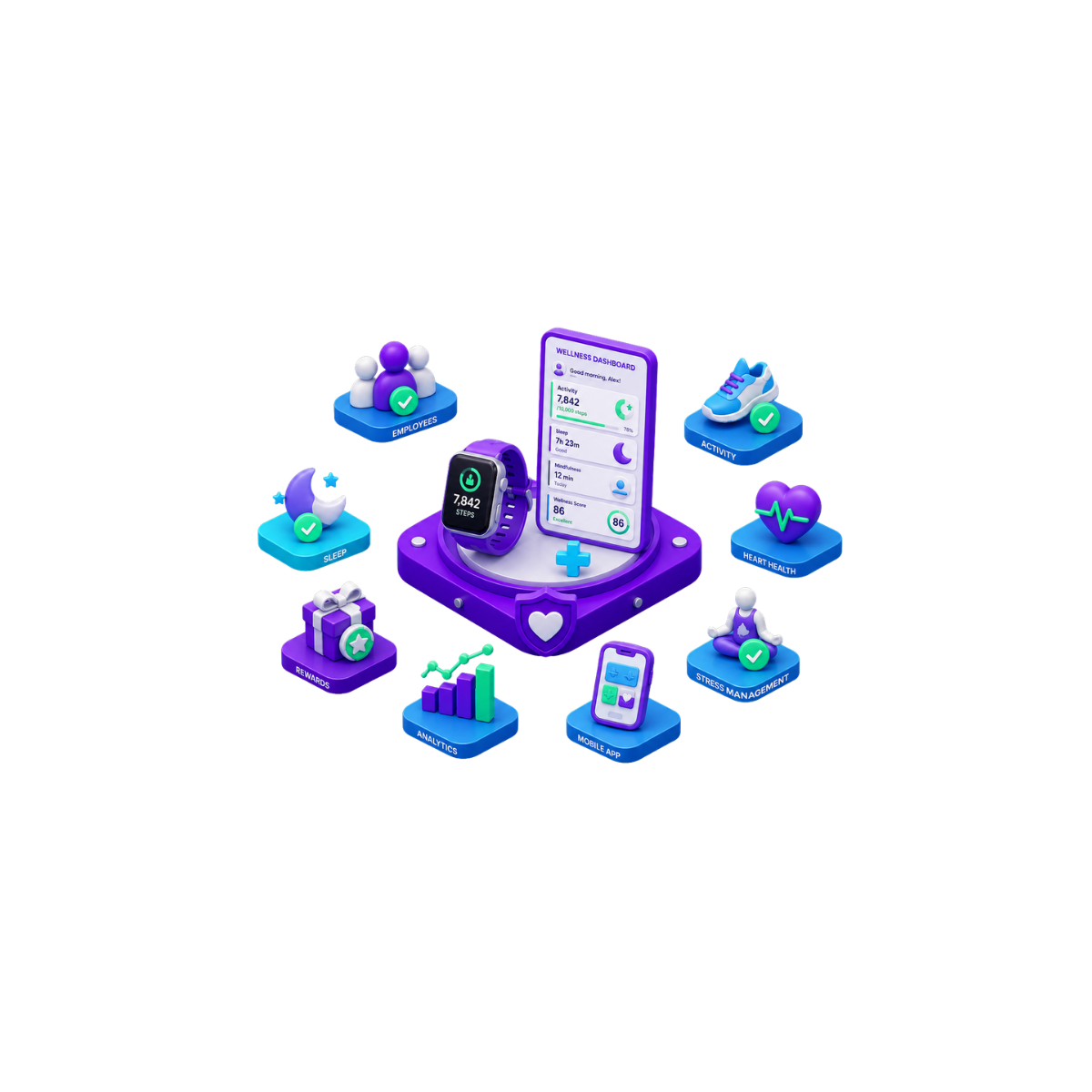
ROOK helps companies integrate and standardize health data from multiple wearable devices and platforms.
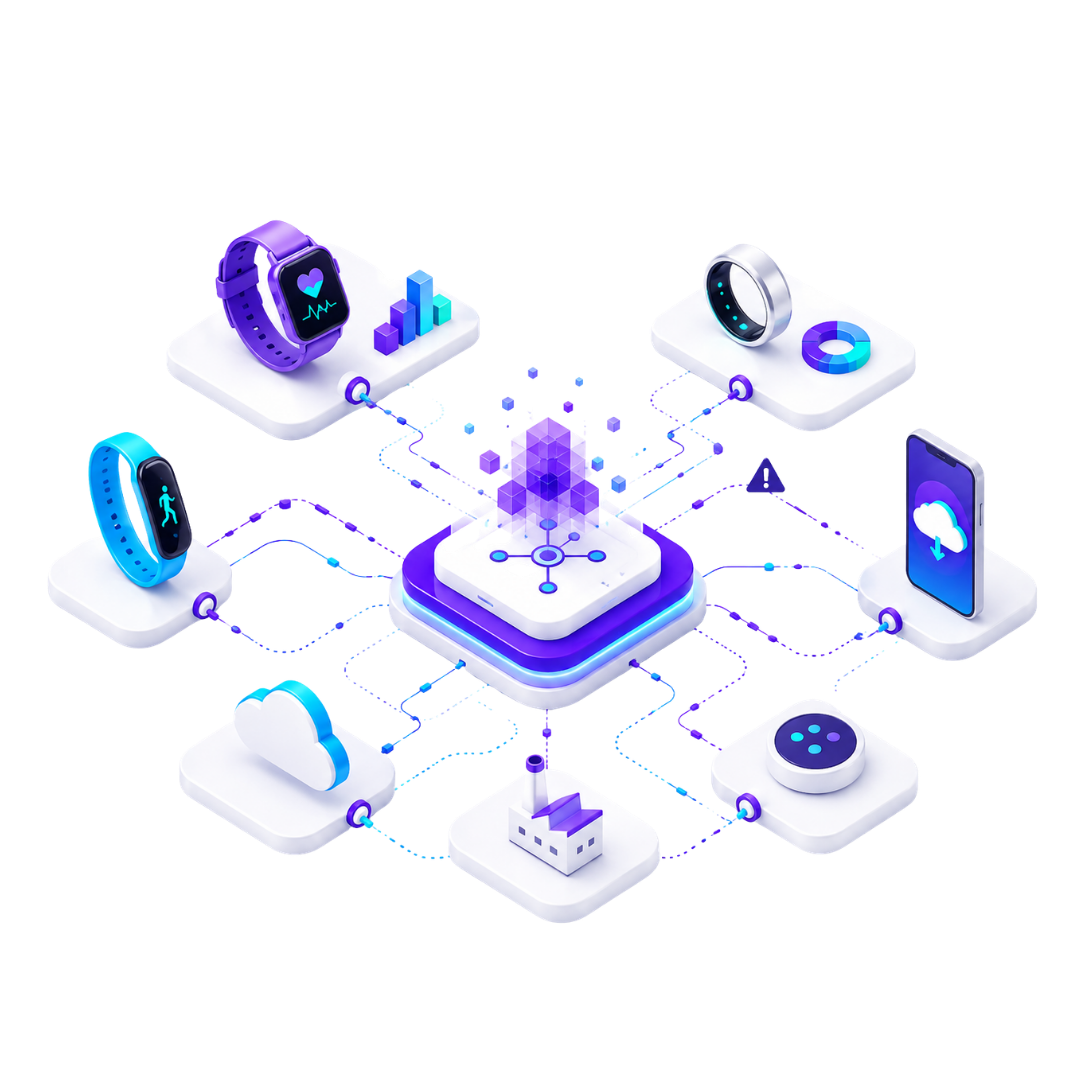
Instead of building and maintaining a separate integration for every provider, teams can use ROOK Connect to authorize, extract, process, normalize, and deliver health data through unified infrastructure.
This helps companies work with related signals such as:
Sleep
Physical activity
Heart rate
Heart rate variability
Body metrics
Recovery indicators
With a consistent data foundation, teams can more easily:
Analyze sleep and physical activity together
Identify changes across multiple health signals
Compare personal trends over time
Develop personalized recommendations
Create recovery and performance features
Build health scores and analytics
Scale products across multiple wearable ecosystems
ROOK does not diagnose fatigue, sleep disorders, or overtraining. It provides the standardized health data infrastructure companies need to build their own product logic, analytics, and user experiences.
Organizations can explore ROOK’s wearable data use cases for fitness, wellness, healthcare, and other industries to see how this infrastructure can support different applications.
So, what matters more: sleep or training?
There is no universal answer for every person and situation.
However, if the comparison is between an imperfect training routine and consistently insufficient sleep, sleep may have the broader impact because it supports recovery, energy, cognition, and overall physiological function.
A more useful conclusion is:
Poor training can limit progress and increase injury risk.
Poor sleep can interfere with recovery and daily functioning.
Training and sleep influence each other.
Long-term patterns matter more than a single workout or night.
Personal context is essential when interpreting the data.
Instead of asking whether sleep or training matters more, it may be better to ask:
Is your sleep supporting your training, and is your training allowing enough recovery?
Conclusion
Training is essential, but its benefits depend partly on the body’s ability to recover.
The goal is not simply to train harder or track more data. It is to build a balanced system in which:
Activity
Sleep
Recovery
work together.
True health does not come from optimizing one isolated habit. It comes from understanding how different behaviors and health signals interact over time.
For companies building digital health and fitness products, that understanding begins with connected, consistent, and standardized health data.
